
Clear Aligner Orthodontic Treatment
What Is Clear Aligner Orthodontic Treatment?
Clear aligner orthodontic treatment is a method of orthodontic care that uses transparent aligners to gradually move teeth into the ideal position. During treatment, multiple sets of custom-made clear aligners are used. Each set is slightly different from the previous one. Through gentle pressure generated at the contact points between the aligners and the teeth, the teeth are slowly guided to the planned positions.
Treatment Principles
Clear aligner orthodontic treatment uses computer planning to design the orthodontic process, and custom aligners are produced using 3D scanning and printing technology. Each aligner typically moves teeth by about 0.25 to 0.5 mm. During treatment, aligners must be changed according to the prescribed schedule so that teeth continue to move steadily and gradually.
Suitable Candidates
Clear aligner orthodontic treatment is more suitable for the following dental conditions:
Mild to moderate crowding
Excessive spacing
Mild malocclusion
Slightly protruding front teeth
Mild underbite
For severe and complex dental problems, cases requiring significant root movement, or those involving jawbone issues, traditional orthodontic methods may be more suitable.
Treatment Process
Initial assessment
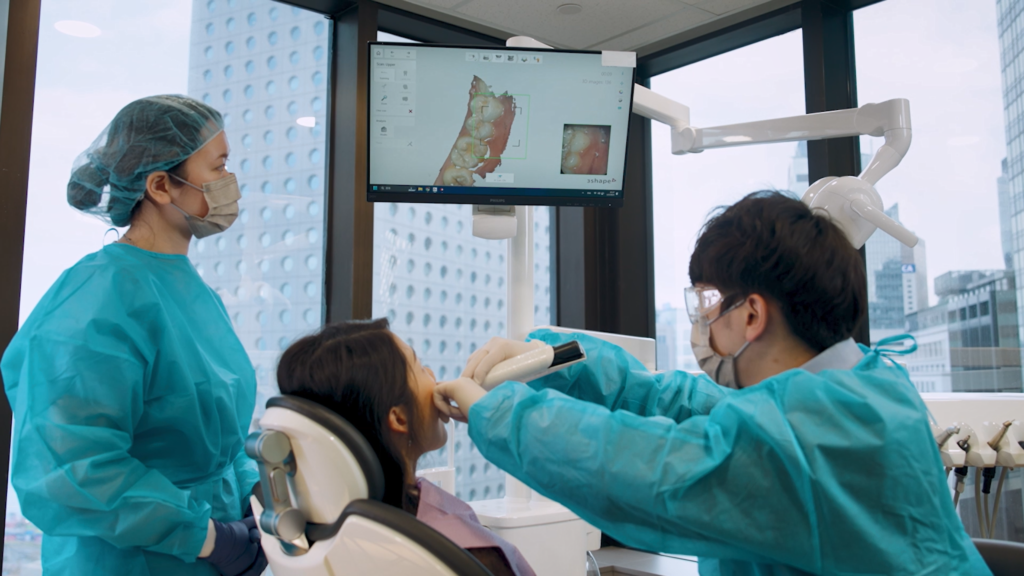
The registered dentist will conduct a detailed oral examination to assess tooth alignment, bite, and overall oral health. X-rays are taken to understand the roots and bone structure, and a 3D scanner is used to capture precise dental data.
Treatment planning
Based on the patient’s dental condition, the dentist will use computer simulation to map the tooth movement path, develop a personalised orthodontic treatment plan, and estimate the treatment duration.
Aligner fabrication and wear
After the treatment plan is confirmed, a series of clear aligners will be made. Patients must change aligners regularly as instructed, typically every 1 to 2 weeks.
Regular follow-up visits
During treatment, regular follow-up visits are required so the dentist can check whether tooth movement is progressing according to the plan and provide the next stage of aligners. Follow-ups are generally scheduled every 6 to 8 weeks.
Treatment Duration
Treatment time varies depending on each individual’s dental condition. For most mild to moderate cases, the course of treatment generally takes about 6 to 18 months. The actual treatment duration must be confirmed after assessment by a registered dentist.
Wear Requirements
To achieve the expected treatment outcome, clear aligners must be worn for 20 to 22 hours per day. It is recommended to remove the aligners only when eating, drinking hot beverages, and brushing your teeth. If wear time is insufficient, tooth movement may not achieve the expected results and treatment time may even be prolonged.
Important Notes
Wear compliance
Patients need a high level of self-discipline and must consistently wear the aligners for sufficient time each day. For those who lack self-discipline or often forget to wear them, treatment results may be affected.
Oral hygiene
Teeth should be cleaned after every meal before putting the aligners back on. Maintain good oral hygiene habits and clean the aligners regularly.
Regular follow-up visits
Patients must attend follow-up visits on time so the dentist can monitor treatment progress. If any discomfort or questions arise during treatment, consult the dentist promptly.
Use of retainers
After completing orthodontic treatment, retainers must be worn as instructed by the dentist to prevent teeth from shifting back to their original positions.

Treatment Limitations
Clear aligner orthodontic treatment is not suitable for everyone. For extremely complex cases, situations requiring jaw surgery, or cases where teeth need significant rotational movement, traditional orthodontic methods may be a more appropriate choice.
The Importance of Seeking Professional Advice
Each patient’s dental condition is different, and the treatment plan must be tailored to the individual. Before deciding to undergo clear aligner orthodontic treatment, patients should seek professional advice from a registered dentist to understand the nature of the treatment, expected outcomes, potential risks, and other treatment options.
The dentist will assess the patient’s specific needs and provide appropriate professional recommendations, enabling the patient to make an informed decision with a full understanding of the situation.
This information is for reference only and does not replace professional dental consultation. If you have any dental or oral problems, please consult a registered dentist for professional advice. Treatment results vary from person to person, and the actual situation must be assessed by a registered dentist.

